TEQTON'S WORK WITH ENVIRONMENTAL CHALLENGES AND CSR
Teqton delivers flooring solutions with a focus on minimising our CO₂ emissions.


MEnvironmental requirements and documentation are becoming increasingly important when choosing flooring solutions.
Here you can read about how Teqton works with environmental impact, service life, documentation and certifications.
Teqton works systematically to reduce the climate impact of every project. Our jointless concrete floors have a long service life, require minimal maintenance, can be laid as a renovation on top of existing floors and are produced with local subcontractors to reduce transport.
Specific sustainability points:
• Long service life – a Teqplan floor lasts for decades, which reduces the environmental impact per year of use.
• Fewer repairs – this reduces material consumption and transport over time.
• Renovation option – Teqplan can be laid on existing floors, which avoids demolition.
• Local suppliers – we choose local subcontractors to reduce transport emissions.
• Circular economy – material recycling and resource efficiency are built into our process.
• No toxic solvents – the dispersion in Teqplan is solvent-free.
Yes. Teqton has EPDs (Environmental Product Declarations) and LCAs (life cycle assessments) for our products, as well as relevant certifications that document their environmental performance. This is particularly important in projects with BREEAM, LEED, Miljöbyggnad or GreenBuilding requirements.
How does Teqton contribute to the UN Sustainable Development Goals?
Teqton actively works with several of the UN’s 17 Sustainable Development Goals, including through sustainable construction, responsible production, climate action and decent working conditions. Sustainability is not a side activity, but part of how we plan and carry out every project.
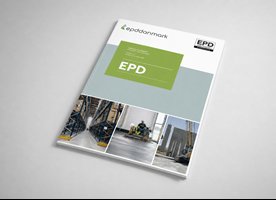
EAn EPD (Environmental Product Declaration) is a third-party verified environmental declaration that shows a product’s environmental impact throughout its life cycle, based on a life cycle assessment (LCA).
The EPD makes it possible to compare different materials consistently and is used as documentation in construction projects where environmental performance must be reported, for example for environmental certification..
EPDs are used as input for buildings’ life cycle assessments (LCAs), which are part of certification systems such as DGNB, BREEAM, LEED and Miljöbyggnad.
They provide verifiable information about the environmental impact of materials and are an important part of the documentation in the certification process. Teqton provides EPD and LCA data to support design, climate calculations and environmental documentation.
LCA (Life Cycle Assessment) is a method for assessing a product’s total environmental impact throughout its entire life cycle, from raw material extraction and production to use, maintenance and recycling or disposal.
When choosing a floor, it is therefore important not to look only at the climate impact of manufacturing. Service life, maintenance needs and the need for future renovations also affect the floor’s overall environmental performance.

MORE INFO ABOUT TEQTON?
Contact Ole Skov for questions and guidance on our products and available certifications